

Bothersome Bugs
 Depending on the season, time of day, and weather, your hike may be spectacular or burdened with thousands of obnoxious insects bothering you the entire time. From late fall to early spring, insects are less of a concern, and that is when I really enjoy hiking more. As the summer progresses, I head to higher and higher country to stay away from the droves of blood-sucking little critters. Then, when cool weather returns, I head back down.
General Insect Protection
 I've gathered some tips for dealing with hiking pests in general:
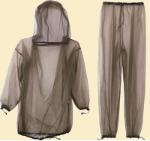
- Wear long-sleeved shirts and long pants. Very light-weight, light-colored clothes can be very cool and they keep most of your skin protected. I have a Buzz-Off shirt and pants that I've been using for two summers. I haven't gotten ticks or mosquito bites while wearing them, so I am very happy with the product.
- Wear light-colored clothes. Lighter colors make it easier to see insects while they are still on the outside of your clothes.
- Tuck pants into socks. This keeps ticks and other crawlies from getting inside your pants legs.
- Wear a hat for both sun protection and keeping insects out of your hair.
- Wear an insect screen hat, jacket, or full body suit. These look kinda dorky, but they really keep the mosquitos and everything else away from your body.
- After your hike, take a shower and check all over your body for ticks.
Ticks
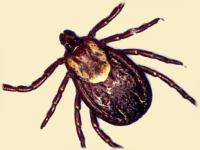 Ticks seam to appear magically while hiking. They can't really fly, but sometimes I wonder how one could have gotten on me without some means of air travel. I hate ticks. I think they are about the most disgusting looking insect around, especially when they're puffed up with blood. Yuch!
Ticks are mostly just a nuisance. They silently and painlessly bite their way into your skin where they suck up your blood. Usually, you find them before they start eating because it takes them awhile to find a good spot and then work their fangs into you.
Preventing Ticks
- The best way to prevent tick bites is to avoid ticks. Stay indoors and watch TV. But, if you're serious about being a hiking dude, that just won't cut it. So, follow these tips to make your hikes a bit less tick-ful:- Avoid brushy areas and tall grass. Try to walk in the middle of the trail and avoid hanging branches.
- Sunny, dry areas can still have ticks, but fewer than shady, damp areas.
- Wear Permethrin treated clothes or spray it on your clothes. It kills the ticks rather than repelling them and lasts through many washings of your clothes.
- Use DEET-based insect repellents on exposed skin. A 25%-30% solution works super from my experience. I mix 2 ounces of 100% DEET with 6 ounces of 4.7% DEET "OFF! Skintastic" pump spray repellent for a 28% solution that works great.
- Check each other for ticks when you stop for breaks.
Removing Ticks
- There are many home-grown ways to remove ticks, from burning to covering in fingernail polish - all of them are bad ideas. The best way to remove a tick is:- Wipe the wound area with an alcohol wipe.
- Grasp the tick with a sharp pointed tweezers right down where it is entering your skin.
- Pull it straight away from your skin with a slow, steady pressure. Don't yank it; don't twist it; don't rock it back and forth.
- Even removing the tick as efficiently as possible may leave some of its mouthparts in your skin. If this happens, pinch up a fold of skin that contains the bite area and carefully scrape the skin containing the mouth parts with a scalpel or razor blade. Or, use a sterilized needle to break the skin and remove the mouth.
- It's very important to thoroughly clean the wound with antiseptic.
- If you're concerned with the possibility of Lyme Disease, keep the tick in a film canister or between a piece of folded tape and take it to a public health lab for inspection.
Mosquitos
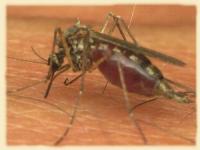 The big deal at the time of creating this page is West Nile Virus. It has spread across the country from the southeast and there are now cases reported in virtually all states. It is still a very tiny risk, but that may change as it progresses. Even without the West Nile virus, mosquitos suck! They buzz around your face, constantly bothering you. Then, when they do bite, it itches like the dickens.
Preventing Mosquitos
- Fortunately, it is possible to practically eliminate mosquito bites with a few preventive measures:- Use DEET-based insect repellent in a 20% solution. Spray it on exposed skin to stop mosquitos from landing. Be sure to wash it off in the shower as soon as you get home.
- Wear Permethrin treated clothes. Either buy pre-treated shirts and pants like "Buzz Off" or treat yourself with permethrin sprays.
- Hike during the morning and early afternoon. Be off the trail before sunset to avoid the peak mosquito hours.
- Hike on open, sunny trails rather than in shady, protected forest. The views are better, the wind will blow mosquitos away, and the drier air is harder on bugs.
- Burning citronella candles can help keep mosquitos away from an area, but wind will blow the smell away easily.
Treating Mosquito Bites
- There's not much to do after you've been bitten. The first indication is an intense itching feeling, so here's what you do when you notice a bite:- Don't itch it! That just causes more damage and possible infection.
- Wash the bite area with soap and water.
- Apply an anti-itch medicine such as Calamine lotion. There are anti-itch sticks that you daub on the bite and they work good for me.
Spiders
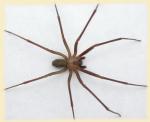 You may not know it, but all spiders are poisonous. Cool, huh? It's just that there are very few that have poison powerful enough to bother humans. But, those that are dangerous are bad - black widows, brown recluse, tarantula, sac spider, and funnel-web spider. Spider bites are actually very rare and a victim may not realize he's been bitten for hours afterwards.
Preventing Spider Problems
- Spiders are not highly mobile like flying insects and are not laying in wait to attack you like ticks. With some common sense and keeping your eyes open, you should never be bitten by a spider:- Never reach someplace that you can not see - under rocks, into holes, around branches.
- Shake out clothes, gloves, boots before putting them on.
- When hiking through trees, being tall, I often get spider webs in my face that shorter people have walked under. In those places, I hike slower, point the end of my hiking stick out ahead of me and move it in a circle to catch the webs 4 or 5 feet before I reach them.
- Look before you sit down or lean against a tree to rest.
- Wear gloves when doing any outdoor work.
Treating Spider Bites
- Spider bites usually have one or two puncture spots, but are often so tiny they can not be seen. Different spiders cause different reactions, but in general spider bites should be treated by:- Wash the bite area with soap and water.
- Place ice pack or cold water towel on bite area.
- Elevate and rest the wounded spot to reduce swelling.
- Watch for symptoms and record them.
- Call or visit a doctor as soon as you can.
- Try to identify the spider. If it is available, take the spider's live or dead body with you to the doctor.
Bees and Such
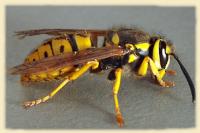 Bees, wasps, hornets, yellow jackets, ... they are everywhere and they are beneficial to our environment, but they can sure be a pain. As a kid, I used to put honey on my finger and let bumblebees climb on and lick it up - never got stung. My mom said I was stupid and lucky. Stings from these critters hurt a lot and, for about 1% of humans, they can be deadly. If you've been stung and you know its not a big deal, don't take stings lightly when they happen to someone else.
Honey bees have a barbed stinger and it gets stuck in your skin so they can only sting once. But, yellow jackets and hornets have no barbs and can sting repeatedly.
Preventing Stinging Problems
- Since bees fly around looking for flowers, it's very difficult to avoid them while you're outdoors. Their stinger is a defensive device and you get stung when you become a threat. So, the best guidelines are to stay clear of the insects as much as possible:- Avoid wearing bright or flowery patterned clothes. You may attract a bee looking for flowers. Wearing light-colored clothes, like tan or white, is good.
- Avoid perfume and scented lotions.
- Avoid wearing shiny jewelry.
- Avoid strongly odored food that may be attractive.
- Don't drink from cans - a bug may have gotten inside trying to get to the sweet liquid. Look in your cup before you drink from it.
- Keep your food and garbage sealed in plastic bags.
- If a bee or wasp is bothering you, slowly move away down the trail. Swatting at it or rapid movement can provoke an attack.
Treating Stings
- Most stings are just painful but do no real damage. If you are attacked by a large number of insects or are allergic to stings then there is danger. If you are stung:- Stay Calm. Getting excited will just speed up the blood flow and spread of venom.
- If the insect is still attacking you, brush it off and leave the area quickly.
- If the stinger is still stuck in you, remove it by scraping it off with a credit card or pulling it off with a tweezer. It has been recommended that using a tweezer can force more venom into the wound, but more recent studies say that removing the stinger as quickly as possible is more important. So, use what you can to get it out.
- Apply ice or cold water to the sting area.
- Control itching and swelling with over-the-counter antihistamines.
- Don't itch or rub the sting spot.
- If allergic reaction symptoms appear or the victim is known to be allergic, get medical help immediately. Symptoms include difficulty breathing, swelling of tongue, mouth, or throat, and hives.
There are other bugs that can bother you while hiking. Chiggers, flies, and other crawling, creeping, swarming things that are all just part of the wild. Be aware of the kinds of insects to be found in the areas you hike and be ready in case of an encounter with them. Having a wilderness first aid booklet along is always a good idea, too.
 Bothered by Blisters
 Knee & Leg Problems
All Comments:
May 01, 2012 - Steve
May 01, 2012 - Hiking Dude
Nov 06, 2012 - JUANITA RIECHERS
Nov 06, 2012 - Hiking Dude
Apr 06, 2015 - wayne
Apr 06, 2015 - Hiking Dude
Jun 26, 2015 - Mindy
Aug 23, 2015 - brokkenpiloot
Oct 15, 2015 - Patrick O'Brien
Oct 18, 2015 - Hiking Dude
I got stung two separate days on the A.T. and I know what you mean about the 'hot needle'.
Oct 28, 2016 - Rylai
Oct 28, 2016 - Hiking Dude
Oct 29, 2016 - Rylai
Jan 16, 2017 - Deborah Funderburk
Jan 16, 2017 - Hiking Dude
Jun 28, 2019 - Sue
Jun 28, 2019 - Hiking Dude
Aug 03, 2019 - melissa
Aug 03, 2019 - Hiking Dude
Hike On!
Jul 12, 2020 - Roland
Jul 12, 2020 - Hiking Dude
If it's a dozen, I wouldn't be too concerned. If it's more, I'd consider turning back or detouring off the trail to go around.
If this is a managed trail that gets traffic, I'd just let the land management agency responsible for it know about the spot so they can decide if anything needs to be done.
Ask a Question
Find more Hiking Resources at www.HikingDude.com
Follow Me
Recent Comments